


















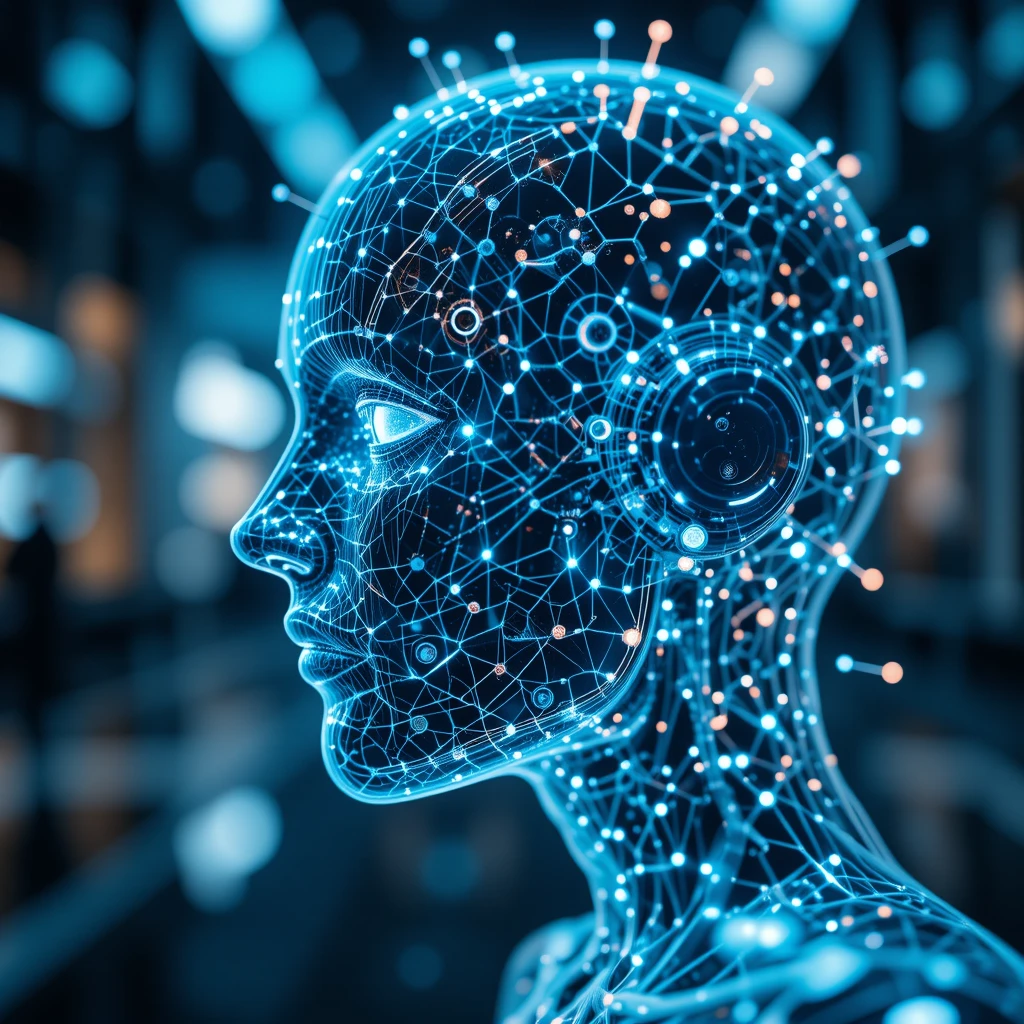
The whispers about Artificial Intelligence (AI) have grown into a roaring conversation, and if you think you’ve seen the peak, brace yourself. The next 12 months are poised to be the most transformative period yet for the tech industry, driven almost entirely by the accelerating capabilities and widespread adoption of AI. This isn’t just about ChatGPT anymore; it’s about a fundamental shift in how technology is built, used, and experienced.
Here’s a deep dive into how AI will reshape the tech landscape over the coming year:
—
1. Software Development Gets Supercharged: The Rise of the AI Co-Pilot
Gone are the days when AI coding assistants were a novelty. In the next 12 months, AI will become an indispensable co-pilot for every developer. We’ll see:
-
- Massive Productivity Gains: Tools like GitHub Copilot, Amazon CodeWhisperer, and integrated IDE AI features will move beyond basic code suggestions to generating entire functions, classes, and even complex algorithms based on natural language prompts.
- Automated Testing & Debugging: AI will be leveraged to write more comprehensive test cases, identify bugs earlier in the development cycle, and even suggest fixes, drastically reducing time-to-market for new features and products.
- Intelligent Code Refactoring: AI will analyze existing codebases, identify inefficiencies, and propose optimized structures, making legacy systems more maintainable and scalable.
- Skill Shift: Developers won’t be replaced, but their roles will evolve. The focus will shift from boilerplate coding to architecting, prompt engineering, critical thinking, and managing AI-generated solutions.
—
2. The Rise of Specialized AI Hardware & Edge Computing
The computational demands of advanced AI models are immense. The next year will see a significant push in specialized hardware:
-
- Dedicated AI Chips (ASICs): Beyond general-purpose GPUs, companies will further invest in and deploy Application-Specific Integrated Circuits (ASICs) tailored specifically for AI workloads, offering unprecedented speed and energy efficiency. Expect more players to challenge Nvidia’s dominance in specific niches.
- Edge AI Proliferation: Running AI models directly on devices (smartphones, IoT sensors, autonomous vehicles, industrial robots) without needing to send data to the cloud will become more common. This reduces latency, enhances privacy, and enables real-time decision-making in critical applications.
- Cloud Infrastructure Optimization: Major cloud providers will continue to roll out more powerful and accessible AI-as-a-Service offerings, making advanced AI capabilities available to businesses of all sizes, fueling rapid innovation.
—
3. Hyper-Personalization Becomes the Norm, Not the Exception
AI’s ability to process vast amounts of data will lead to truly bespoke experiences across various sectors:
-
- Adaptive User Interfaces (UIs): Websites and apps will dynamically reconfigure themselves based on individual user behavior, preferences, and context, offering a uniquely tailored experience.
- Predictive Analytics on Steroids: From retail recommendations to healthcare diagnostics, AI will deliver increasingly accurate predictions, leading to more effective marketing campaigns, proactive maintenance, and personalized medical treatments.
- Context-Aware Interactions: Virtual assistants will become significantly smarter, understanding nuances in conversations, anticipating needs, and providing more relevant and proactive support across devices.
—
4. Enhanced Business Intelligence & Automation Across the Enterprise
AI will move beyond isolated experiments to become integral to daily business operations:
-
- Automated Data Analysis & Reporting: AI will not only process and visualize data but also generate insights and actionable recommendations, empowering non-technical users to make data-driven decisions faster.
- Intelligent Workflow Automation: Robotic Process Automation (RPA) will merge more deeply with AI, creating “intelligent automation” that can handle more complex, cognitive tasks, from customer service to supply chain management.
- Strategic Decision Support: AI models will assist executives and managers in scenario planning, risk assessment, and resource allocation, providing a competitive edge in volatile markets.
—
5. The Evolving Workforce: Skills, Not Substitutions
While fears of job displacement persist, the next 12 months will primarily highlight the transformation of roles and the emergence of new opportunities:
-
- Demand for AI-Literate Professionals: Every role, from marketing to finance, will benefit from individuals who understand how to leverage AI tools and interpret AI outputs.
- Emergence of New Roles: Prompt engineers, AI ethicists, AI model trainers, and AI integration specialists will become highly sought after.
- Upskilling Imperative: Companies and individuals must invest heavily in training to remain relevant and productive in an AI-augmented world. The ability to collaborate effectively with AI will be a core competency.
—
6. Cybersecurity: A Double-Edged Sword
AI will play a pivotal role in both defending and attacking digital assets:
-
- Advanced Threat Detection: AI-powered security systems will become more sophisticated in identifying novel threats, zero-day exploits, and anomalous behavior that traditional rule-based systems might miss.
- AI-Driven Offense: Malicious actors will also weaponize AI to create more convincing phishing attacks, generate polymorphic malware, and automate reconnaissance, leading to a constant arms race between AI security and AI attackers.
- Proactive Defense: AI will enable security teams to predict potential vulnerabilities and proactively patch systems before they can be exploited.
—
7. Ethical AI & Regulatory Scrutiny Will Intensify
As AI becomes more pervasive, the imperative for responsible development will reach a fever pitch:
- Bias Mitigation: Greater emphasis will be placed on identifying and reducing biases in AI models, particularly in critical applications like hiring, lending, and healthcare.
- Transparency & Explainability (XAI): The demand for “black box” AI models to explain their decision-making processes will grow, crucial for building trust and ensuring accountability.
- Emerging Regulations: Governments globally will accelerate efforts to regulate AI, focusing on data privacy, safety, and ethical guidelines. Companies will need to navigate a complex and evolving regulatory landscape.
—
Conclusion: Brace for Unprecedented Acceleration
The next 12 months will not just be another year of technological advancement; it will be a period of unprecedented acceleration driven by Artificial Intelligence. The tech industry will be redefined, with traditional boundaries blurring and new possibilities emerging at a dizzying pace.
For businesses and individuals alike, the key to thriving will be adaptation, continuous learning, and a willingness to embrace AI not as a threat, but as the most powerful co-creator we’ve ever encountered. Get ready; the future is now, and it’s powered by AI.
—
What are your predictions for AI’s impact in the next year? Share your thoughts in the comments below!